

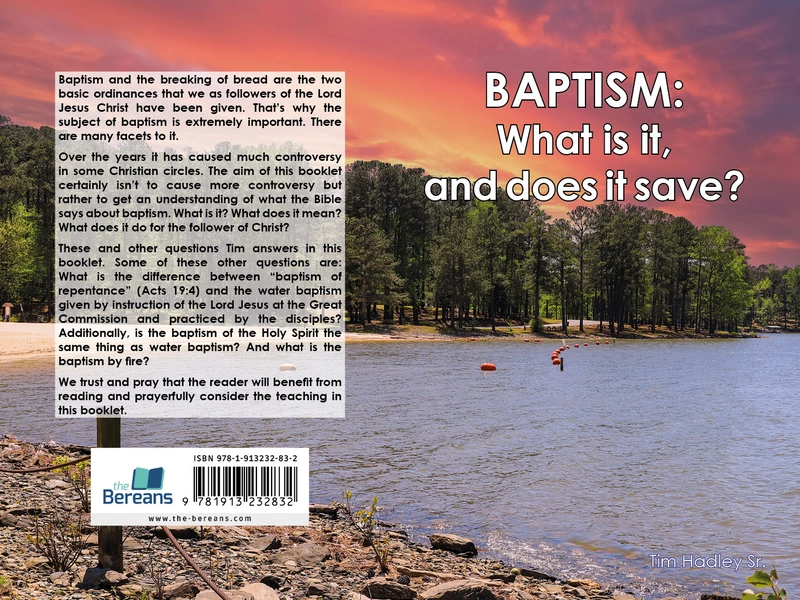
Baptism. What is it and does it save?—Tim Hadley Sr.
Le baptême et la fraction du pain sont les deux ordonnances fondamentales données à ceux qui suivent le Seigneur Jésus Christ. C’est pourquoi le sujet du baptême est extrêmement important. Il comporte de nombreux aspects.
Au fil des années, il a suscité bien des controverses dans certains milieux chrétiens. Le but de ce livret n’est certainement pas d’en ajouter, mais de comprendre ce que la Bible dit du baptême. Qu’est-ce que c’est ? Que signifie-t-il ? Qu’apporte-t-il au disciple de Christ ?
Tim répond à ces questions et à d’autres encore : quelle est la différence entre le « baptême de repentance » (Actes 19.4) et le baptême d’eau institué par le Seigneur Jésus lors du grand mandat et pratiqué par les disciples ? Le baptême du Saint Esprit est-il la même chose que le baptême d’eau ? Et qu’est-ce que le baptême de feu ?
Nous avons confiance, et nous prions, que le lecteur tirera profit de cette lecture et considérera avec prière l’enseignement de ce livret.
Piqué (12x18 cm), 32 pages
Baptism and the breaking of bread are the two basic ordinances that we as followers of the Lord Jesus Christ have been given. That’s why the subject of baptism is extremely important. There are many facets to it.
Over the years it has caused much controversy in some Christian circles. The aim of this booklet certainly isn’t to cause more controversy but rather to get an understanding of what the Bible says about baptism. What is it? What does it mean? What does it do for the follower of Christ?
These and other questions Tim answers in this booklet. Some of these other questions are: What is the difference between “baptism of repentance” (Acts 19:4) and the water baptism given by instruction of the Lord Jesus at the Great Commission and practiced by the disciples? Additionally, is the baptism of the Holy Spirit the same thing as water baptism? And what is the baptism by fire?
We trust and pray that the reader will benefit from reading and prayerfully consider the teaching in this booklet.
Saddle-stitched (12x18 cm), 32 pages
Die Taufe und das Brotbrechen sind die beiden grundlegenden Anordnungen, die uns als Nachfolgern des Herrn Jesus Christus gegeben sind. Deshalb ist das Thema Taufe außerordentlich wichtig. Es hat viele Facetten.
Im Lauf der Jahre hat es in manchen christlichen Kreisen viel Streit ausgelöst. Ziel dieses Büchleins ist es gewiss nicht, weiteren Streit zu entfachen, sondern zu verstehen, was die Bibel über die Taufe sagt. Was ist sie? Was bedeutet sie? Was bewirkt sie für den Nachfolger Christi?
Diese und weitere Fragen beantwortet Tim in diesem Büchlein. Einige davon: Worin unterscheidet sich die „Taufe der Buße“ (Apg 19,4) von der Wassertaufe, die der Herr Jesus im Missionsbefehl angeordnet hat und die die Jünger praktizierten? Ist die Taufe mit dem Heiligen Geist dasselbe wie die Wassertaufe? Und was ist die Taufe mit Feuer?
Wir vertrauen und beten, dass der Leser Nutzen aus diesem Büchlein zieht und die darin enthaltene Belehrung unter Gebet erwägt.
Rückstichheftung (12x18 cm), 32 Seiten
Produktdetails
Le baptême et la fraction du pain sont les deux ordonnances fondamentales données à ceux qui suivent le Seigneur Jésus Christ. C’est pourquoi le sujet du baptême est extrêmement important. Il comporte de nombreux aspects.
Au fil des années, il a suscité bien des controverses dans certains milieux chrétiens. Le but de ce livret n’est certainement pas d’en ajouter, mais de comprendre ce que la Bible dit du baptême. Qu’est-ce que c’est ? Que signifie-t-il ? Qu’apporte-t-il au disciple de Christ ?
Tim répond à ces questions et à d’autres encore : quelle est la différence entre le « baptême de repentance » (Actes 19.4) et le baptême d’eau institué par le Seigneur Jésus lors du grand mandat et pratiqué par les disciples ? Le baptême du Saint Esprit est-il la même chose que le baptême d’eau ? Et qu’est-ce que le baptême de feu ?
Nous avons confiance, et nous prions, que le lecteur tirera profit de cette lecture et considérera avec prière l’enseignement de ce livret.
Piqué (12x18 cm), 32 pages
Baptism and the breaking of bread are the two basic ordinances that we as followers of the Lord Jesus Christ have been given. That’s why the subject of baptism is extremely important. There are many facets to it.
Over the years it has caused much controversy in some Christian circles. The aim of this booklet certainly isn’t to cause more controversy but rather to get an understanding of what the Bible says about baptism. What is it? What does it mean? What does it do for the follower of Christ?
These and other questions Tim answers in this booklet. Some of these other questions are: What is the difference between “baptism of repentance” (Acts 19:4) and the water baptism given by instruction of the Lord Jesus at the Great Commission and practiced by the disciples? Additionally, is the baptism of the Holy Spirit the same thing as water baptism? And what is the baptism by fire?
We trust and pray that the reader will benefit from reading and prayerfully consider the teaching in this booklet.
Saddle-stitched (12x18 cm), 32 pages
Die Taufe und das Brotbrechen sind die beiden grundlegenden Anordnungen, die uns als Nachfolgern des Herrn Jesus Christus gegeben sind. Deshalb ist das Thema Taufe außerordentlich wichtig. Es hat viele Facetten.
Im Lauf der Jahre hat es in manchen christlichen Kreisen viel Streit ausgelöst. Ziel dieses Büchleins ist es gewiss nicht, weiteren Streit zu entfachen, sondern zu verstehen, was die Bibel über die Taufe sagt. Was ist sie? Was bedeutet sie? Was bewirkt sie für den Nachfolger Christi?
Diese und weitere Fragen beantwortet Tim in diesem Büchlein. Einige davon: Worin unterscheidet sich die „Taufe der Buße“ (Apg 19,4) von der Wassertaufe, die der Herr Jesus im Missionsbefehl angeordnet hat und die die Jünger praktizierten? Ist die Taufe mit dem Heiligen Geist dasselbe wie die Wassertaufe? Und was ist die Taufe mit Feuer?
Wir vertrauen und beten, dass der Leser Nutzen aus diesem Büchlein zieht und die darin enthaltene Belehrung unter Gebet erwägt.
Rückstichheftung (12x18 cm), 32 Seiten