

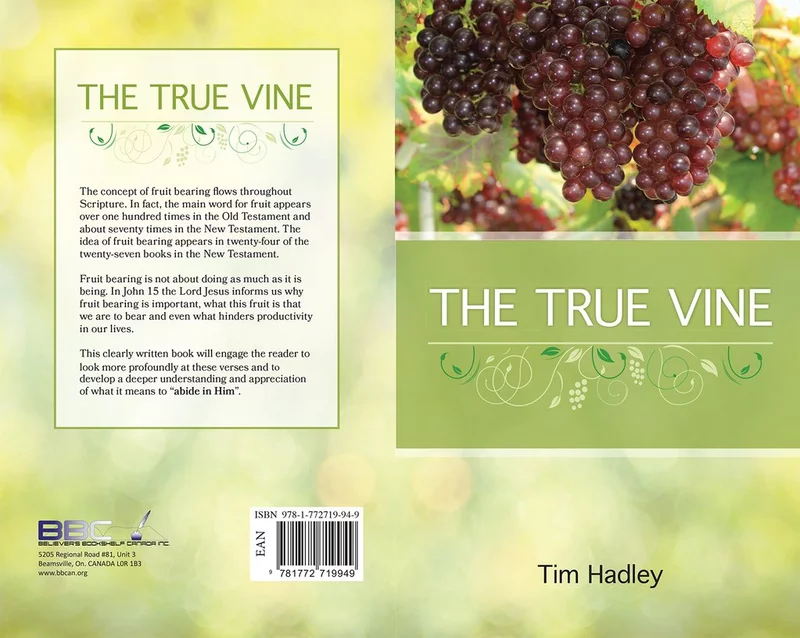
The True Vine—Tim Hadley
La notion de fruit traverse toute l’Écriture. Le mot principal pour « fruit » apparaît plus de cent fois dans l’Ancien Testament et environ soixante-dix fois dans le Nouveau. L’idée de porter du fruit se trouve dans vingt-quatre des vingt-sept livres du Nouveau Testament.
Porter du fruit, c’est moins une question de faire que d’être. En Jean 15, le Seigneur Jésus nous dit pourquoi il est important de porter du fruit, quel est ce fruit que nous devons porter, et même ce qui empêche notre vie d’en produire.
Ce livre clairement écrit invitera le lecteur à examiner ces versets plus en profondeur et à mieux comprendre et apprécier ce que signifie « demeurer en Lui ».
The concept of fruit bearing flows throughout Scripture. In fact, the main word for fruit appears over one hundred times in the Old Testament and about seventy times in the New Testament. The idea of fruit bearing appears in twenty-four of the twenty-seven books in the New Testament.
Fruit bearing is not about doing as much as it is being. In John 15 the Lord Jesus informs us why fruit bearing is important, what this fruit is that we are to bear and even what hinders productivity in our lives.
This clearly written book will engage the reader to look more profoundly at these verses and to develop a deeper understanding and appreciation of what it means to “abide in Him”.
Das Thema Fruchtbringen zieht sich durch die ganze Schrift. Das Hauptwort für „Frucht“ kommt im Alten Testament über hundertmal und im Neuen Testament etwa siebzigmal vor. Der Gedanke des Fruchtbringens findet sich in vierundzwanzig der siebenundzwanzig Bücher des Neuen Testaments.
Beim Fruchtbringen geht es weniger um Tun als um Sein. In Joh 15 zeigt uns der Herr Jesus, warum Fruchtbringen wichtig ist, was die Frucht ist, die wir bringen sollen, und sogar, was unser Leben daran hindert, Frucht zu tragen.
Dieses klar geschriebene Buch regt den Leser an, sich eingehender mit diesen Versen zu befassen und tiefer zu verstehen und zu schätzen, was es bedeutet, „in Ihm zu bleiben“.
Produktdetails
La notion de fruit traverse toute l’Écriture. Le mot principal pour « fruit » apparaît plus de cent fois dans l’Ancien Testament et environ soixante-dix fois dans le Nouveau. L’idée de porter du fruit se trouve dans vingt-quatre des vingt-sept livres du Nouveau Testament.
Porter du fruit, c’est moins une question de faire que d’être. En Jean 15, le Seigneur Jésus nous dit pourquoi il est important de porter du fruit, quel est ce fruit que nous devons porter, et même ce qui empêche notre vie d’en produire.
Ce livre clairement écrit invitera le lecteur à examiner ces versets plus en profondeur et à mieux comprendre et apprécier ce que signifie « demeurer en Lui ».
The concept of fruit bearing flows throughout Scripture. In fact, the main word for fruit appears over one hundred times in the Old Testament and about seventy times in the New Testament. The idea of fruit bearing appears in twenty-four of the twenty-seven books in the New Testament.
Fruit bearing is not about doing as much as it is being. In John 15 the Lord Jesus informs us why fruit bearing is important, what this fruit is that we are to bear and even what hinders productivity in our lives.
This clearly written book will engage the reader to look more profoundly at these verses and to develop a deeper understanding and appreciation of what it means to “abide in Him”.
Das Thema Fruchtbringen zieht sich durch die ganze Schrift. Das Hauptwort für „Frucht“ kommt im Alten Testament über hundertmal und im Neuen Testament etwa siebzigmal vor. Der Gedanke des Fruchtbringens findet sich in vierundzwanzig der siebenundzwanzig Bücher des Neuen Testaments.
Beim Fruchtbringen geht es weniger um Tun als um Sein. In Joh 15 zeigt uns der Herr Jesus, warum Fruchtbringen wichtig ist, was die Frucht ist, die wir bringen sollen, und sogar, was unser Leben daran hindert, Frucht zu tragen.
Dieses klar geschriebene Buch regt den Leser an, sich eingehender mit diesen Versen zu befassen und tiefer zu verstehen und zu schätzen, was es bedeutet, „in Ihm zu bleiben“.